


Western Blotting Made Easy: Proven Tips for Consistent, High-Quality Data

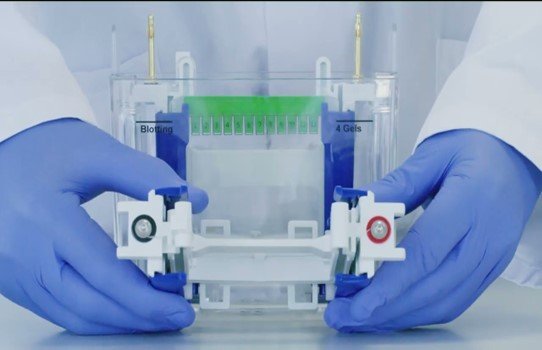
Western blotting is a widely used technique for detecting and analyzing specific proteins in a sample. Whether you’re a beginner or an experienced researcher, optimizing your Western blot procedure can significantly improve the clarity and reproducibility of your results. Below are some valuable tips to ensure your Western blot is successful:
1. Start with Quality Samples
The quality of your protein samples is crucial for obtaining reliable results. Ensure you are working with fresh, well-prepared samples, and use appropriate lysis buffers for your cells or tissue type. Here are some key points to remember:
- Cell Lysis: Choose the correct lysis buffer based on the protein’s properties. Please note that Membrane proteins may require detergents (Cepham RIPA lysis buffer 10456; https://www.cephamls.com/ripa-lysis-buffer/; Universal protein extraction kit, 10457; https://www.cephamls.com/universal-protein-extraction-kit-with-protease-inhibitor-cocktail/).
- Protein Concentration: Measure the protein concentration accurately using methods like the BCA assay or Bradford assay (Cepham BCA; https://www.cephamls.com/bca-bicinchoninic-acid-protein-assay-with-bsa-standard/ Bradford; https://www.cephamls.com/bradford-protein-assay-with-bsa-protein-standard/). Overloading or underloading protein can affect the outcome.
- Protease Inhibitors: Always include protease inhibitors in your lysis buffer to prevent protein degradation during sample preparation (Cepham Protease inhibitor cocktail; https://www.cephamls.com/protease-inhibitor-cocktail-100x-mammalian/).
2. Optimize Protein Loading
Loading the right amount of protein onto your gel is essential for clear, interpretable blots.
- Standardize Loading: It’s important to load equal amounts of protein across all lanes. Use a housekeeping protein (e.g., β-actin, GAPDH) as an internal control to ensure consistent loading (Cepham, GAPDH antibody, https://www.cephamls.com/gapdh1-antibody-hrp-conjugated/).
- Avoid Overloading: Too much protein can lead to smearing, while too little can result in weak signals. A good starting point is to load around 20–50 µg of total protein per lane, but this may vary depending on your specific experiment.
3. Choose the Right Gel Concentration
The choice of gel concentration depends on the size of the target protein.
- Smaller Proteins (under 30 kDa): Use a higher percentage acrylamide gel (e.g., 12–15%).
- Larger Proteins (above 100 kDa): Use a lower percentage acrylamide gel (e.g., 6–10%).
- Gradient Gels: These can be used to separate a wider range of protein sizes simultaneously.
4. Control the Electrophoresis Conditions
Electrophoresis conditions are crucial for separating proteins based on size. Ensure that the running buffer is fresh and at the correct pH to maintain proper protein migration.
- Voltage and Time: Start with a standard voltage (e.g., 100V for stacking gel and 150V for resolving gel) and adjust as needed for optimal separation. Keep an eye on the progress to prevent overrun or poor resolution.
- Pre-cooling the Gel: If you are working with larger proteins, pre-cooling the gel can help prevent the proteins from diffusing or aggregating during the run.
5. Optimize Transfer Conditions
Protein transfer from the gel to the membrane is one of the most critical steps in Western blotting. Poor transfer can lead to weak or absent bands.
- Membrane Type: PVDF membranes are often preferred for higher sensitivity, but nitrocellulose can also work well for most applications.
- Transfer Buffer: Use the appropriate transfer buffer (e.g., Tris-Glycine or Tris-Tricine; Cepham transfer buffer, https://www.cephamls.com/western-transfer-buffer-10x/) with added methanol (usually 10–20%) to help improve transfer efficiency.
- Transfer Time and Voltage: Standard conditions are 90–100V for 1 hour, but larger proteins may require lower voltage or extended transfer time. Ensure that the membrane is well-hydrated prior to transfer.
- Check Transfer Efficiency: After transfer, stain the membrane with Ponceau S solution (Cepham Ponceau S solution, https://www.cephamls.com/ponceau-s-solution/) to visualize the total protein content and confirm successful transfer.
6. Optimize Blocking
Blocking is essential to prevent non-specific binding of antibodies.
- Blocking Agent: Use 5% non-fat dry milk or BSA for blocking, depending on the type of antibody you’re using. For phospho-specific antibodies, BSA is preferred, while milk can be better for general antibodies (Cepham Blocking buffer, https://www.cephamls.com/blotto-blocking-buffer-5-milk-protein/).
- Blocking Time: Block the membrane for at least 1 hour at room temperature or overnight at 4°C. If using milk, be aware that some antibodies may be affected by milk proteins and should be replaced with non-milk sources.
7. Choose High-Quality Antibodies
Antibody quality plays a significant role in the success of your Western blot.
- Primary Antibody: Always choose a primary antibody with good specificity and sensitivity for your target protein. Make sure the antibody is validated for Western blot applications.
- Secondary Antibody: Use a secondary antibody that is specific to the species of the primary antibody and conjugated to a detection system (e.g., HRP or fluorophore). Ensure it has low background and high affinity.
8. Optimize Antibody Incubation
Incubation times and temperatures can significantly affect the quality of your Western blot.
- Primary Antibody: Incubate the membrane with the primary antibody overnight at 4°C for optimal binding, or for 1-2 hours at room temperature.
- Secondary Antibody: Incubate for 1 hour at room temperature. Be sure to thoroughly wash the membrane after each antibody incubation to minimize non-specific binding.
9. Use Proper Detection Methods
Detection systems vary depending on the type of label used on the secondary antibody (e.g., chemiluminescence, fluorescence).
- Chemiluminescence: If using chemiluminescent detection, ensure that your substrate is fresh and applied properly. Expose the membrane to X-ray film or a CCD imager and optimize exposure time to avoid overexposure or underexposure.
- Fluorescence: Fluorescent detection allows for multiplexing and can give higher sensitivity but requires specialized equipment like a fluorescence scanner.
10. Maintain Rigorous Controls
Including proper controls in your experiment is critical to validate your results.
- Positive Controls: Include a sample known to express the target protein to confirm that your antibodies and detection system are functioning properly.
- Negative Controls: Use a sample that lacks the target protein or use an isotype control antibody to check for background signal.
- Housekeeping Proteins: Include a loading control to confirm that equal amounts of protein were loaded in each lane and to ensure that the transfer was uniform.
Conclusion
Western blotting is a powerful technique, but achieving consistent, reliable results requires attention to detail and optimization at every step. From sample preparation to detection, each stage presents an opportunity to improve the quality of your data. By following these tips and troubleshooting common issues, you can significantly improve the reliability and clarity of your Western blot results, ensuring that your research stands on solid ground.